
What Digital Loyalty Coupons Actually Do That Discount Codes Cannot

Updated: Jul 28
A discount code reduces a price. A digital loyalty coupon changes a behavior. A 20%-off promo code gets shared across Reddit, claimed by strangers, and strips the margin you were counting on. Digital loyalty coupons are conditional offers tied to a specific customer's history, identity, and relationship with your business. They reward the right person at the right moment. Discount codes reward anyone who finds the string of characters.
TL;DR
Discount codes are public, uncontrolled, and often margin-damaging. Digital loyalty coupons are personal, conditional, and tied to earned behavior.
Digital coupon redemption can be tracked to the individual customer, giving you data discount codes never can.
Loyalty program features like birthday coupons, time-gated offers, and visit-triggered rewards do things a promo code structurally cannot.
The best digital coupon marketing protects margin while increasing the frequency of purchase, not just the size of a single transaction.
Independent businesses that treat loyalty coupons as relationship tools see better return than those that treat them as discounts.
About the Author
meed builds digital loyalty programs specifically for independent and small businesses. Cafes in Santiago, salons, gyms, restaurants, and retail stores use it daily, which means meed's perspective on coupon strategy comes from watching real independent operators run real offers, not from how enterprise marketing teams theorize about them.
What Is the Structural Difference Between a Discount Code and a Digital Loyalty Coupon?
A discount code is a string of text. Anyone with the code can use it. There is no identity check, no purchase history requirement, no relationship condition. It is a price markdown with a password.
A digital loyalty coupon is an offer attached to a verified customer record. It requires that person to have enrolled in your loyalty program. It can require a minimum number of visits, a birthday match, a specific time window, or a spending threshold before it activates [1]. The offer is earned, not found.
That structural difference has real consequences:
Discount codes attract deal-seekers. Loyalty coupons attract returning customers.
Discount codes erode your base price perception over time. Loyalty coupons reinforce that regulars get treated better.
Discount codes give you no data. Loyalty coupons tell you exactly who redeemed, when, and what they bought before.
"Most loyalty tools were built for chains. meed wasn't."
Why Does Digital Coupon Redemption Behave Differently When It's Tied to a Loyalty Program?
Digital coupon redemption inside a loyalty program is tracked at the individual level [3]. You know which customer used it, how many visits they had before redeeming, how long they've been a member, and whether they came back after. A generic promo code tells you a code was used. That's the entire data set.
Without individual-level redemption data, you cannot answer basic questions:
Did this offer bring back someone who'd gone quiet, or did it just discount a purchase they were going to make anyway?
Are customers who redeem loyalty coupons more or less likely to return afterward?
Which offer format drives more second visits: a percentage off or a free item?
Couponing in 2026 is almost entirely digital, and the tools that perform best are the ones connected to identity and behavior, not just to a transaction [5]. Loyalty-linked digital coupon marketing gives you both.
What Loyalty Program Features Make Coupons More Effective Than Generic Discounts?
The loyalty program features that separate a smart coupon from a margin-burning promo code are mostly structural. They control who gets the offer, when it activates, and what condition triggers it [1].
Feature | What It Does | What a Discount Code Does Instead |
Visit-triggered coupons | Activates after a set number of visits or purchases | Activates the moment anyone types the code |
Birthday coupons | Sent only to members on their birthday | Not possible to personalise by date |
Time-gated offers | Valid only during a specific window you control | Often shared and used long after intended expiry |
Single-use redemption | Each coupon is tied to one customer, one use | A single code can be used unlimited times if not capped |
Wallet-delivered notifications | Sent directly to Apple or Google Wallet with location triggers | Requires email open, click, and manual application at checkout |
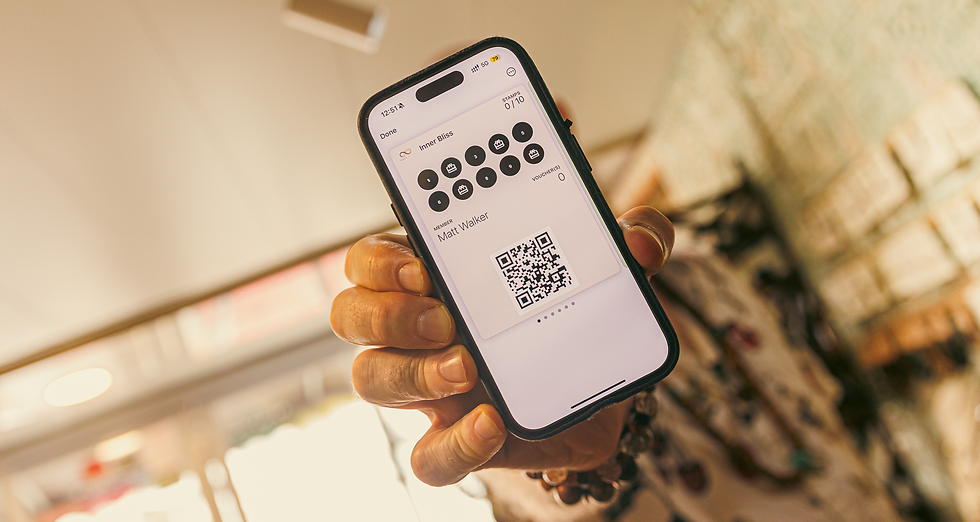
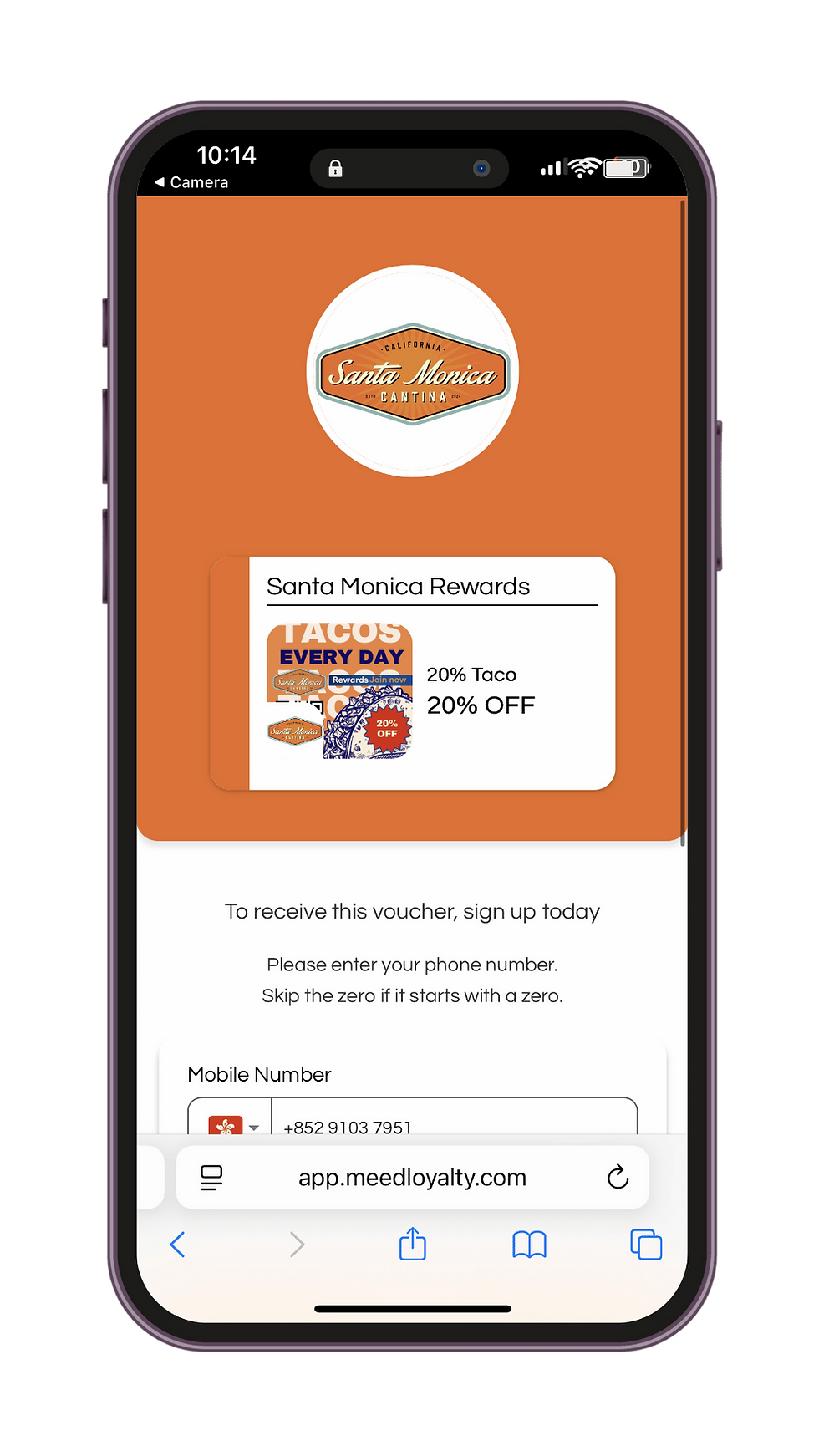
meed's digital coupons and birthday coupons operate on exactly this logic. They're delivered to the customer's phone via Apple Wallet or Google Wallet, no app required, and they're only accessible to members who've earned their way to them. A coffee shop in Santiago went from guessing which customers were regulars to knowing exactly who came back and when.
How Does Digital Coupon Marketing Protect Margin Better Than Promo Codes?
The margin risk in a discount code is uncontrolled distribution [1]. Post a code publicly, and you've given your worst-margin offer to your most price-sensitive, least loyal customers. That's the opposite of what a promotion should do.
Targets by behavior. Offers go to customers who already buy from you, reducing the cost of acquisition.
Sets conditions that protect margin. Minimum spend thresholds mean the coupon drives a larger basket, not just a cheaper one.
Limits distribution. One coupon per member, per period. No viral leakage.
Tests and iterates. Because redemption is tracked individually, you can compare offer formats and drop the ones that underperform.
Most independent businesses have moved from paper coupons to digital ones [2]. Few have made the next move to loyalty-linked digital coupons.
Are Traditional Loyalty Programs or Digital Ones Better for Coupon Delivery?
Traditional loyalty programs, paper stamp cards and manually tracked discounts, have no mechanism for delivering a coupon at the right moment. They are passive. The customer carries the card. Nothing happens unless they're physically in front of you [4] [6].
Digital loyalty programs can push a birthday coupon on the morning of a customer's birthday. They can trigger a location-based notification when a member walks near your shop. They can flag a lapsed customer and send a win-back offer automatically [7]. None of that is possible with a paper card or a spreadsheet.
For businesses using coupons to drive specific behavior rather than react to slow periods, digital wins on every measure [4].
Frequently Asked Questions
Can I use digital loyalty coupons if I don't have a POS system?
Yes. Platforms like meed use AI-powered receipt scanning to verify purchases without requiring any POS integration. The customer scans their receipt and the system rewards them automatically.
What makes a digital loyalty coupon different from a regular e-coupon?
A regular e-coupon is typically a code anyone can use. A digital loyalty coupon is tied to a specific, verified member and can only be redeemed by that person, often after meeting a condition like a minimum number of visits
.
How do I stop customers from sharing my loyalty coupons?
Loyalty coupons issued through a wallet-based program are tied to the individual's device. They can't be copied and pasted like a promo code. Single-use mechanics mean each coupon is invalidated after one redemption
.
Do customers need to download an app to use digital loyalty coupons?
Not with wallet-native platforms. meed delivers coupons directly to Apple Wallet or Google Wallet. The customer doesn't download anything beyond what's already on their phone.
What's the best type of loyalty coupon for bringing back lapsed customers?
Time-limited win-back offers with a clear expiry date tend to work better than open-ended discounts. The time constraint creates urgency. Pairing it with a personalized trigger, like a milestone or anniversary, increases relevance
.
How does digital coupon marketing differ from traditional discounting?
Traditional discounting lowers your price for everyone. Digital coupon marketing through a loyalty program lowers the price selectively, for customers who've earned it, at a moment that drives a specific behavior
.
Is digital loyalty coupon tracking actually useful for a small business?
More useful at smaller scale, not less. Fewer transactions means every data point carries more weight. Knowing which offer brought someone back, and which one didn't, is the difference between a promotion that costs you margin and one that pays for itself
.
About meed
meed is a digital loyalty platform built for independent and small businesses that need professional loyalty tools without enterprise-level complexity or cost. Loyalty programs run through Apple Wallet and Google Wallet, requiring no app download from customers. Setup takes under five minutes, and the platform supports digital stamp cards, AI receipt scanning, NFC check-ins, digital coupons, and birthday offers, all managed through a single web dashboard. Every feature is built around one thing: the business knowing exactly who's coming back, and when.
Loyalty-linked coupons do things a promo code structurally cannot.
References
Digital coupon marketing strategy that protects margin (www.voucherify.io)
Save Smart With Digital Coupons - Consumer Reports (www.consumerreports.org)
Dynamic Coupons: Drive Customer Loyalty & Sales | Digioh (www.digioh.com)
Rivo | Digital Loyalty Programs vs Traditional: Which is Right for You? (www.rivo.io)
2026 Coupon Guide: Best Apps, Tools and Tips - NerdWallet (www.nerdwallet.com)
The Most Simple, Low-tech Loyalty Programs for Businesses (www.stampme.com)
Loyalty Discounts: How They Work & Examples That Drive Return Visits (www.yotpo.com)

Comments