
Your Loyalty Program Has a Drop-Off Problem. It Usually Happens at Sign-Up.

Updated: Jul 28
The sign-up step is where the majority of drop-off happens, and most business owners never track it. A customer hears about the program, shows mild interest, hits one small piece of friction, and moves on. The loyalty card never gets issued. The relationship never starts. The program reports low engagement, and the owner moves on to other problems. The entry point was always the issue [1].
TL;DR
Sign-up friction is the leading cause of loyalty program failure, not reward structure [1].
App downloads are the single biggest barrier to enrollment. Wallet-native programs remove it entirely.
A QR code loyalty program reduces sign-up to seconds. No staff training required.
Apple Wallet loyalty cards and Google Wallet loyalty cards keep the program visible without reminders.
Most drop-off is preventable with simpler enrollment mechanics, not bigger budgets [4].
About the Author: meed builds digital loyalty programs for independent businesses across more than 20 industry verticals. A coffee shop in Santiago went from guessing which customers were regulars to knowing exactly who came back and when. That kind of visibility into where loyalty programs break down is what meed is built on.
What Is Loyalty Program Drop-Off, and Why Does It Start at Sign-Up?
Loyalty program drop-off is the point where a potential member disengages before completing enrollment or before earning their first reward. Most analysis focuses on inactive members. The more damaging drop-off happens earlier, before someone ever makes it onto the member list at all [3].
The sign-up moment is fragile. A customer is at the counter, mid-transaction, slightly distracted. They're open to joining. Then they're told to download an app. Or to fill out a form. Or to wait for an email. The window closes [4].
Common friction points at sign-up:
Requiring an app download before the first stamp is issued
Lengthy registration forms asking for data customers don't want to give
Enrollment steps that rely on staff remembering to mention the program
No immediate reward on joining, so there's no reason to complete the process
Programs that only work on a specific device or in a specific app ecosystem
Each of those points has a direct fix. The structural changes cost less than most businesses assume [8].
Why Do App-Based Loyalty Programs Lose Members Before They Start?
App fatigue is real. Consumers tend to have more loyalty program accounts than they actively use, and asking a customer to download another app to earn a free coffee is a significant ask relative to the perceived value of a single visit [5].
The numbers are not in favor of app-based enrollment:
Most people abandon app store pages before downloading
Even completed downloads often result in a single use, then deletion
Notifications from standalone loyalty apps get muted quickly
Staff rarely follow through consistently on encouraging downloads during busy periods
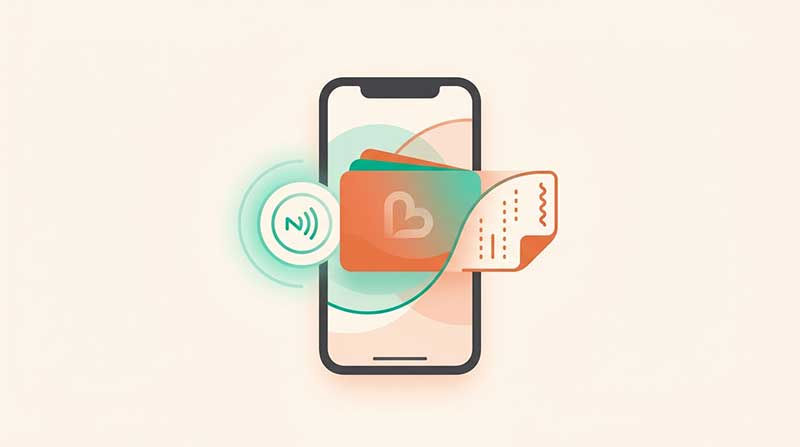
An Apple Wallet loyalty card or Google Wallet loyalty card removes this entirely. The card is added to the wallet the customer already uses daily. No new app. No account creation in a third-party system. No friction between interest and enrollment [6].
The customer taps or scans. The card appears in their wallet. Done.
Wallet-native loyalty also solves the visibility problem. The card stays on the device. Location-triggered notifications remind the customer when they're nearby. The program is present without the business doing anything extra [2].
How Does a QR Code Loyalty Program Fix the Sign-Up Problem?
A QR code loyalty program compresses enrollment to a single step. The customer scans. The loyalty card opens. They add it to their wallet. That's the full process.
No staff script required. No counter conversation. No dependency on the customer remembering a website URL or spelling out their email address correctly.
Where QR codes work in practice:
Printed on receipts so enrollment happens post-purchase when intent is highest
On table cards or counter displays, visible throughout the visit
On packaging, extending enrollment beyond the physical location
In social media bios or posts, reaching existing followers who haven't joined
In follow-up messages or email footers
The QR code doesn't need a staff member to be present. It doesn't need a working internet connection at the counter. It works while the business is running [7].
Is Sign-Up Friction Different Across Business Types?
The friction is consistent in type but different in severity depending on the business environment.
Business Type | Primary Sign-Up Problem | Best Enrollment Mechanic |
Cafe / coffee shop | Fast queue, no time for forms | QR code on counter or receipt |
Restaurant / takeaway | Sign-up competes with eating | QR code on receipt, post-meal |
Loyalty program for salons | Staff busy during appointment, easy to forget | NFC tap or QR code at checkout |
Gym / fitness studio | Members aren't thinking about loyalty mid-workout | Link in onboarding message or front desk QR |
Retail / boutique | One-time visit mindset, low intent to join | Immediate first-visit reward to change perception |
Pop-up / market vendor | No fixed counter, chaotic environment | Printed QR on packaging or bag insert |
A loyalty program for salons has a specific version of this problem. The appointment is the most natural moment to mention the program, but it's also when staff are focused, equipment is running, and the customer is mid-service. A QR code on the mirror or checkout counter removes the dependency on a verbal introduction entirely [4].
What Happens After Sign-Up That Also Causes Drop-Off?
Getting someone enrolled is step one. Keeping them engaged is step two, and it's where programs that got sign-up right still fall apart [2].
The most common post-sign-up failures:
No immediate reward on joining. If the first interaction feels like a waiting game, motivation drops [7].
Rewards that are too far away. A customer who needs 20 stamps to earn anything will disengage by stamp three [1].
The program becomes invisible. If there's no prompt to return, most customers forget it exists [3].
Complexity after a simple sign-up. A frictionless entry followed by a confusing points system creates its own frustration [5].
Wallet-native programs address the visibility issue automatically. An Apple Wallet loyalty card or Google Wallet loyalty card surfaces when the customer is near the business. The reminder is built into the infrastructure [6].
How Should a Business Measure Its Sign-Up Drop-Off Rate?
Most businesses only look at total member count. That number is the least useful one. Measurement is what separates businesses that fix the problem from those that assume it doesn't exist.
Basic metrics worth tracking:
Enrollment rate: what percentage of customers who see the sign-up prompt complete enrollment
First-stamp rate: of those who enrolled, how many earned at least one reward in the early membership period
Active member rate: percentage of enrolled members who have visited within a recent time window
Redemption rate: of members who reach a reward threshold, how many actually claim it
A low enrollment rate points to a sign-up problem. A low first-stamp rate points to a motivation problem. A low redemption rate points to a reward structure problem. Each is a different diagnosis and needs a different response.
Frequently Asked Questions
What is the most common reason loyalty programs fail at sign-up?
Friction. Specifically, asking customers to download an app or complete a lengthy form at the moment they're deciding whether to join. The simpler the enrollment step, the higher the completion rate [1].
Does an Apple Wallet loyalty card or Google Wallet loyalty card actually improve retention?
Yes, for a specific reason. Wallet-native cards stay on the device and surface with location-based notifications. The program remains visible without requiring additional action from the business or the customer [6].
Is a QR code loyalty program secure enough for customer data?
QR code enrollment typically requires minimal data at the point of sign-up. The customer adds a wallet card. No sensitive data is exchanged at the counter.
How do I know if my loyalty program's drop-off is a sign-up problem versus a rewards problem?
If total member numbers are low relative to foot traffic, it's a sign-up problem. If members enrolled but stopped visiting, it's a rewards or engagement problem. Track both separately [2].
What's the right number of stamps before a reward?
No universal number, but the reward needs to feel achievable within a realistic visit cadence. For a weekly-visit business, more than eight to ten stamps before a first reward is too far [1].
Can a loyalty program for salons work without staff actively promoting it?
Yes, if the enrollment mechanism doesn't depend on a staff conversation. A QR code on the mirror, the checkout counter, or the appointment confirmation message works without verbal introduction [4].
What's the minimum a business should spend to fix its loyalty sign-up problem?
Switching from an app-based program to a wallet-native one, or adding a QR code enrollment point, is a structural change. The cost is typically lower than a single promotional flyer run.
About meed
meed is a digital loyalty tool built for independent businesses. Customers join via QR code or NFC tap and store their loyalty card directly in Apple Wallet or Google Wallet. No app download required. The platform supports digital stamp cards, AI-powered receipt scanning, NFC check-ins, birthday coupons, and multi-location management, all through a branded experience the business controls. meed's free plan covers up to 50 members with all features included. The Pro plan is US$59 per month with unlimited members. Setup takes under five minutes.
The sign-up problem has a fix.
meed sets up in under five minutes. No app for your customers. No POS integration required. Loyalty that runs from the first scan.
See how it works at www.meedloyalty.com.
References
Top 10 Loyalty Program Problems (And How to Fix Them) (antavo.com)
5 Signs Your Loyalty Program Is Failing (And What to Do About Each) (www.referralcandy.com)
Loyalty Program Stagnation: How to Re-Engage Inactive Members | LoyaltyPoint (www.loyaltypoint.io)
10 Main Loyalty Program Mistakes & How to Avoid Them (enable3.io)
6 Customer Loyalty Program Errors That Kill Your CX in 2026 (www.sogolytics.com)
Why Your Loyalty Program Plateaus, and How to Break Through (osf.digital)
How to Increase Repeat Customer Visits Using Loyalty Platforms? 5 Practical Ways (www.nector.io)
10 Biggest Loyalty Program Mistakes (www.stampme.com)

Comments