top of page

Most Businesses Wait for Customers to Come Back. The Ones Growing Are Already in Their Pocket.

Jun 9
7 min read

Updated: Jul 28

Your best customer came in last Tuesday. You have no idea if they'll come back. The businesses that consistently grow repeat revenue share one trait - they don't leave the next visit to chance. They use customer engagement tools to stay present after the transaction ends. Most loyalty programs for small businesses are not about discounts or punch cards. They are about knowing who your regulars are and giving them a reason to choose you again before they consider anywhere else.


TL;DR


  • Passive retention - waiting for customers to return - is the default, and it is expensive.

  • A loyalty program small business owners can actually run needs to be fast to set up, free of hardware, and easy for customers to use.

  • Digital stamp cards and QR code loyalty programs outperform paper alternatives on every measurable dimension.

  • Loyalty program benefits compound: higher visit frequency, higher spend per visit, and stronger word-of-mouth.

  • The barrier to entry is lower than most owners think - setup can take under five minutes with the right platform.


About the Author


meed is a digital loyalty platform built specifically for independent and small-to-medium businesses. With deployments across cafes, restaurants, salons, retail, fitness studios, and event operators globally, meed's perspective on customer retention is grounded in what works at the independent business level - not enterprise theory.


What Being in the Customer's Pocket Actually Means


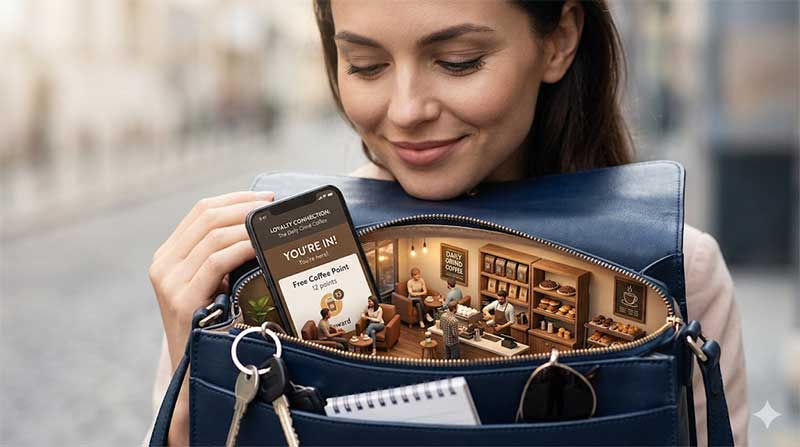
It means your brand is on their phone before they decide where to go next. Not as a notification they'll dismiss. Not as an app they won't download. As a loyalty card sitting inside Apple Wallet or Google Wallet, next to their transit pass and bank card. That's proximity. That's presence at the exact moment a purchase decision forms.


The traditional approach to how to retain customers looks like this: provide a good experience, maybe hand out a paper stamp card, and wait. The problem is that paper cards get lost, forgotten, or stuffed in a drawer. There's no way to reach the customer between visits. And you have no idea who your regulars actually are - you're guessing [1].


A loyalty program that runs from the customer's existing wallet app removes every one of those friction points. No app download. No new account. The card is already there when they walk past your door.


Why Passive Retention Costs More Than You Think


Keeping an existing customer costs less than finding a new one [2]. Small retention gains compound fast [3]. Most independent business owners understand this. Few act on it because the tools available were built for chains and franchises, not for a two-person cafe or a single-location barber.


The result: independent businesses default to passive retention. They rely on product quality and habit. Both erode quietly. A customer who visits weekly can drift to monthly without any single noticeable event. By the time you notice, they're gone.


"Your best customer came in every week for three months, then stopped. You have no idea why."

A loyalty program doesn't just reward repeat visits. It creates a data trail. You start to see who's active, who's lapsed, and when visit frequency drops. That visibility changes how you run your business [4].


What Separates a Loyalty Program That Holds Customers from One That Doesn't


Most loyalty programs fail at the participation level - customers sign up once and never engage again. The cause is almost always friction: too many steps to earn, too complicated to redeem, or a standalone app that competes with the thirty others on someone's phone [6].


A loyalty program for restaurants, retail, or any independent business needs to clear three bars:


  • Zero barrier to join. A QR code loyalty program that takes ten seconds to scan beats a multi-step registration every time.

  • Effortless to use. Customers shouldn't need to remember a card, find an app, or explain anything to staff.

  • Visible between visits. If the loyalty card disappears after sign-up, it's not doing its job. Nearby notifications from Apple and Google Wallet put the card back in front of the customer when they're physically close to your location.


The digital stamp card is the clearest example of a simple mechanism done well. It replaces the paper punch card directly, but adds everything the paper version lacks: it can't be lost, it's branded to your business, and it stays on the customer's phone permanently [5].


How Loyalty Program Benefits Translate to Real Business Outcomes


The harder question is whether loyalty programs actually move revenue - or just reward customers who would have come back regardless.


The evidence points clearly in one direction [1][3][7]:


Metric

Impact on Loyalty Members

Visit frequency

Increases meaningfully once a reward is within reach

Average spend per visit

Members consistently spend more than non-members

Retention rate

Small lifts in retention produce compounding revenue gains over time

Word-of-mouth

Members who feel recognised refer more often

Churn visibility

Lapsed members are identifiable; non-members who drift away are invisible


The last row matters most for independent businesses. Loyalty programs convert anonymous customers into known ones. That shift alone changes what's possible in terms of small business marketing tools - you can run a birthday coupon campaign, a re-engagement push to lapsed members, or a location-triggered alert. None of that is possible if you don't know who your customers are.


What to Look For in a Loyalty Platform


Most platforms on the market were designed for enterprise retail. They require POS integrations, dedicated hardware, or technical setup that a small business owner cannot do mid-shift.


The practical checklist for a loyalty program small business owners can actually run:


  • No POS integration required. AI-powered receipt scanning - where a customer's phone reads their receipt to log a visit - removes this dependency entirely.

  • No app download for customers. Apple Wallet and Google Wallet are already installed. A loyalty card that works inside them has instant accessibility.

  • Multiple enrollment methods. QR code, NFC tap, receipt scan, or a shareable link. Different customers in different situations need different entry points.

  • Setup measured in minutes, not days. If getting started requires a demo call and an onboarding process, most independent owners will abandon it before launch.

  • Transparent pricing. A free plan to test, a flat monthly rate to scale. No per-transaction fees, no surprise costs.


meed was built against exactly this checklist. A fully branded digital stamp card with a QR code loyalty program can be running before the next customer walks in. Neon Tanning Studios set it up and moved from zero digital loyalty participation to a measurable active member base within their first weeks. Kongsi Kopi, a home-based micro business, ran a professional loyalty program from day one. Neither needed a developer or a POS upgrade.


Making Loyalty Visible Between Visits


Enrollment is only the start. The businesses that see the strongest retention use the space between visits actively [7].


Tactics that work for independent businesses:


  • Nearby notifications. When a loyalty member walks near your location, Apple Wallet and Google Wallet can surface your card automatically. No push notification permission required. It just appears.

  • Birthday coupons. Automated, personal, and timed to when a customer is most receptive to a treat.

  • Milestone rewards. Customisable reward paths mean you can build in a surprise at stamp five and a larger reward at stamp ten - keeping customers moving toward the next visit [4][6].

  • Digital coupons. Time-limited offers sent to your member base without needing their email address or a third-party campaign tool.


Frequently Asked Questions


What is a digital stamp card and how does it differ from a paper punch card?


A digital stamp card is a branded loyalty card stored on a customer's phone, typically inside Apple Wallet or Google Wallet. It works exactly like a paper punch card in concept - collect stamps, earn a reward - but cannot be lost, can trigger notifications, and gives the business visibility into who is collecting and when. Paper punch cards provide none of that.


Do customers need to download an app to use a digital loyalty program?


With wallet-native loyalty platforms like meed, no. The loyalty card is added directly to Apple Wallet or Google Wallet, which are already on most smartphones. There is nothing new to download and no account to create.


What are the core loyalty program benefits for a small independent business?


Repeat visit frequency increases, average transaction value is higher among members, and lapsed customers become visible and reachable. You also gain basic customer data - visit history, redemption rates - that passive businesses never have


.


Does a loyalty program for restaurants require a POS integration?


Not with AI-powered receipt scanning. A customer photographs their receipt after paying, and the system reads it and logs the visit automatically. No integration with the till or POS system is needed, which matters for small restaurants that can't afford or manage that kind of technical setup.


How quickly can a small business set up a QR code loyalty program?


With meed, the setup takes under five minutes. You create the program, brand the card with your logo and colours, and share a QR code or link. Customers scan and the card is added to their phone. There is no hardware, no waiting period, and no technical knowledge required.


What small business marketing tools work best alongside a loyalty program?


Birthday coupons, location-triggered wallet notifications, and time-limited digital coupons sent to your member base work well because they reach customers who already chose you. Outbound marketing to strangers costs more and converts less reliably than re-engaging people who already know you


.


Is a loyalty program affordable for a very small or home-based business?


meed offers a free plan that supports up to 50 members with all features included. A home-based micro business can run a fully professional loyalty program at no cost, with the option to scale to the Pro plan at US$59 per month when membership grows.


About meed


meed is a digital loyalty platform built for independent and small-to-medium businesses across cafes, restaurants, retail, salons, fitness studios, and events. Loyalty cards are stored natively in Apple Wallet and Google Wallet - no app download required for customers, no POS integration required for businesses. Setup takes under five minutes, pricing starts free, and the Pro plan covers unlimited members at US$59 per month. meed holds partnerships with Google, AWS, and the Nvidia Inception Program, with active deployments across Asia, Europe, and beyond.


Your regulars are already out there. You just can't see them yet.


Free to start. No app required. Running in minutes. Visit meedloyalty.com to get started.


References


Comments


bottom of page