
What Most Business Owners Get Wrong About Enrolling Their First Loyalty Member

Updated: Jul 28
The first loyalty member you enroll is not a milestone. It is a test. And most small business owners fail it before the customer even walks out the door. The mistake is not in the loyalty program itself - it is in every assumption made before launch: that customers need convincing, that setup needs to be perfect first, that the tech needs to be figured out. None of that is true. The businesses that grow a loyal member base fast are the ones who remove every barrier at the point of sign-up and stop overthinking the rest.
TL;DR
Most enrollment failures happen before the program launches - overthinking delays action.
Complicated sign-up kills momentum. Customers leave if joining takes more than one step.
A Google Wallet loyalty card or Apple Wallet card removes the biggest barrier: the app download.
Loyalty program best practices say start simple, prove value fast, optimize later [2].
The first member sets the standard for your process. Get that right and the rest follows.
About the Author: meed is a digital loyalty platform built specifically for independent and small businesses. With deployments across cafes, restaurants, salons, gyms, and retail - across multiple countries - meed has direct insight into how real-world enrollment plays out at the counter, not in a conference room.
Why does the first loyalty member matter so much?
The first member is where your process gets stress-tested for the first time. Everything you assumed would be smooth either is or it is not. If sign-up takes 90 seconds, it will take 90 seconds for every member after that. If it takes four steps and a customer walks away, that is your process - not a bad customer. How loyalty programs work in theory and how they work in a real shop with a line behind someone are two different things [6]. The first member reveals the gap.
Most business owners treat the first enrollment as low-stakes. It is the opposite. The habit your team builds in that first interaction becomes the habit that either grows your program or stalls it at member number three.
What is the most common enrollment mistake?
Friction. Specifically, asking customers to do too much at the wrong moment [4].
Common friction points that kill enrollment:
Asking them to download an app they have never heard of
Sending them to a URL they have to type manually
Making them fill in a form while holding their coffee and their bag
Explaining how the program works before they have even agreed to join
One of the clearest findings across loyalty program research is that making customers do mental work - calculating points, understanding tiers, reading fine print at the counter - is a direct path to opt-out [4]. The same applies to the join moment. Keep it to one action. One scan. One tap. Done.
A related but distinct problem is timing. Asking someone to join a small business loyalty program while they are paying, managing their kids, or in a hurry is not a pitch - it is an obstacle. The better move: hand them a QR code with a clear one-line benefit, and let them scan it when they are ready [7].
How do wallet-based programs change the enrollment picture?
Stepping back from the tactical detail, a bigger structural issue drives enrollment failure: the app download requirement. It is the single most effective way to lose a willing customer.
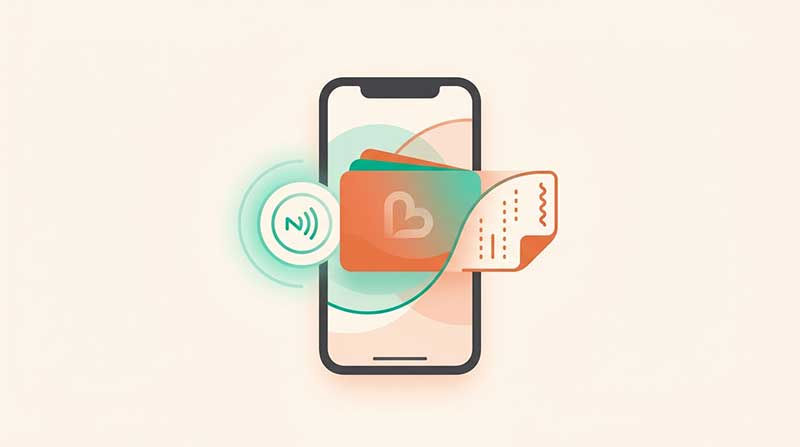
A Google Wallet loyalty card or Apple Wallet card sidesteps this entirely. The loyalty card sits natively on the customer's phone - no separate app, no account creation, nothing to remember to install. The customer scans a QR code, taps to add the card, and it is done. That is the entire process.
For a loyalty program for restaurants, salons, or any business with a fast-moving counter, this matters. The join moment has to be shorter than the customer's patience. Wallet-native programs meet that bar consistently.
Enrollment Method | Steps Required | Works Without App Download | Customer Keeps Card |
Standalone loyalty app | 4-6 (download, create account, verify, find business, join) | No | Only if they keep the app |
Paper punch card | 1 (hand it over) | Yes | Only if they don't lose it |
Wallet-native (QR to Apple / Google Wallet) | 2 (scan QR, tap Add) | Yes | Yes - in their existing wallet |
What do loyalty program best practices actually say about launching?
Building on the enrollment barrier issue, a second mistake compounds it: waiting until everything is perfect before launching.
Loyalty program best practices are consistent on this: launch with a simple, functional program and refine from real behavior - not hypothetical planning [2]. The businesses that overthink the reward structure, the branding, the redemption rules, and the comms strategy before enrolling a single member are the ones still planning six months later while their regulars walk past a competitor who just started [1].
Practical launch guidance:
Pick one enrollment method. QR code is sufficient to start.
Set a reward your regulars will recognize as worth it - not a reward that protects your margins first.
Tell your team what to say in one sentence. Anything longer and they will not say it at all.
Get your first ten members before you change anything. Let real behavior inform your next move [3].
Wrong partner selection is also a documented early mistake [1]. A platform built for enterprise retail does not serve a four-seat hair salon. A loyalty program for salons needs fast check-in, minimal counter friction, and a card customers can find without digging through a separate app. Match the tool to the actual environment.
How should a small business explain loyalty to a first-time member?
One line. That is it.
The temptation is to explain everything - how points accumulate, what the rewards are, how long it takes. Most customers do not need this at join. They need one reason that makes immediate sense [4].
Examples by sector:
Coffee shop: "Every sixth coffee is free - scan this to start."
Salon or loyalty program for salons: "After four visits you get a free treatment - tap the card to join."
Restaurant: "We track your visits automatically - scan this and your next reward is already counting."
The detail appears on the card. The counter is for the pitch, not the manual.
What happens after the first member - and what most businesses miss?
A related but distinct question is what comes after enrollment. Getting the first member is one thing. Keeping them engaged is where most programs quietly fail [5].
The most common post-enrollment mistakes:
Never communicating with members after they join
Setting a reward threshold so high that members give up before reaching it
Not tracking whether enrolled members are actually returning
With meed's free plan, enrolled members receive location-triggered nearby notifications through Apple and Google Wallet when they are close to your business - automatic, no action required from you. If you want to go further - sending a targeted message to members who have not visited in a while, for example - that requires meed Pro, which includes custom notifications alongside advanced analytics on member behavior and campaign performance.
Start with the free plan. It covers everything you need to enroll, reward, and retain your first members. Upgrade when the volume or the strategy demands it.
Frequently Asked Questions
How do I get my first loyalty member to sign up?
Remove every barrier at the point of join. Use a QR code that takes them directly to a wallet card. No app download, no form, one scan. Then give them one clear reason to do it
.
Do customers need to download an app to join a digital loyalty program?
Not with wallet-native programs. A Google Wallet loyalty card or Apple Wallet card is added directly to the customer's existing phone wallet. No separate app required.
What is the biggest loyalty program mistake small businesses make?
Overcomplicating the sign-up process. Customers who cannot join in under 30 seconds at the counter usually do not join at all
.
How does a loyalty program for restaurants or salons work in practice?
A customer scans a QR code or taps an NFC device, the loyalty card is added to their phone wallet, and they earn rewards on each qualifying visit or purchase. No additional hardware or POS integration needed when receipt scanning is used.
When should I upgrade from a free loyalty plan to a paid one?
When you want to send custom messages to specific member groups or need detailed analytics on campaign and member performance. Those are Pro features. The free plan handles enrollment, rewards, and wallet-based nearby notifications.
How many members do I need before a loyalty program is worth running?
One. The process you build with your first member is the process you will run at one hundred. Get it right early
.
What should the reward be for my first loyalty program?
Something your regulars already recognize as valuable. A free product, a meaningful discount, a priority booking. Loyalty program best practices are clear: rewards that protect your margin first and customers second produce low engagement
.
About meed
meed is a digital loyalty platform built for independent and small businesses - cafes, restaurants, salons, gyms, retailers, and more. Customers join through a QR code or NFC tap and carry their loyalty card natively in Apple Wallet or Google Wallet, with no app download required. meed's free plan includes digital loyalty cards, QR enrollment, wallet integration, and nearby notifications, covering everything a business needs to launch and grow a real member base. meed Pro adds custom notifications and advanced analytics for businesses ready to scale. Setup takes under five minutes. No POS integration required.
Your first loyalty member is closer than you think. The process just needs to be simpler than you have made it.
See how meed works for your business at meedloyalty.com.
References
Mistakes to Avoid When Building Your Loyalty Programme (www.epsilon.com)
How to Start a Loyalty Program for Small Business (www.patriotsoftware.com)
How to Launch a Loyalty Program: 7 Mistakes to Avoid (www.comarch.com)
9 Costly Loyalty Program Mistakes (www.saasquatch.com)
Mistakes Brands Make With Loyalty Programs (And How To Get Them Right) (www.forbes.com)
Customer Loyalty Program: The Complete Guide for 2026 | EmberTribe (embertribe.com)
Do's and Don'ts of Increasing Rewards Programs Sign-Ups | SumUp (www.sumup.com)


Comments