
From First Visit to Habit: Designing a Loyalty Journey

A customer’s first visit is an opportunity. It is not loyalty.
They may have discovered your business through a recommendation, walked past your shop or joined because you offered a welcome reward. They may have enjoyed the experience, but that does not mean they are going to return automatically.
Loyalty develops through repeated, positive experiences.
The businesses that build strong customer relationships do not leave the next visit to chance. They design a clear journey that moves customers from first purchase to second visit, from second visit to regular behaviour and from regular behaviour to genuine loyalty.
Start with the behaviour you want to create
Before choosing a reward, decide what you want customers to do.
Do you want them to:
Visit again within the next week?
Book their next appointment?
Try another product?
Visit during a quieter period?
Reach a particular loyalty milestone?
Recommend your business to a friend?
A loyalty programme becomes much more effective when it is built around a specific behaviour.
A coffee shop may want new customers to return three times during their first month. A salon may want clients to book their next appointment before leaving. A restaurant may want customers to visit again on a quieter weekday.
The reward should support that behaviour rather than exist simply because every loyalty programme is expected to have one.
Stage one: Make the first visit easy
The first visit should be simple and memorable.
Customers should understand:
What your business offers
Why it is worth returning
How to join your loyalty programme
What they receive for joining
What they can earn next
Do not overload the customer with information. The first interaction should feel natural, not like an administrative process.
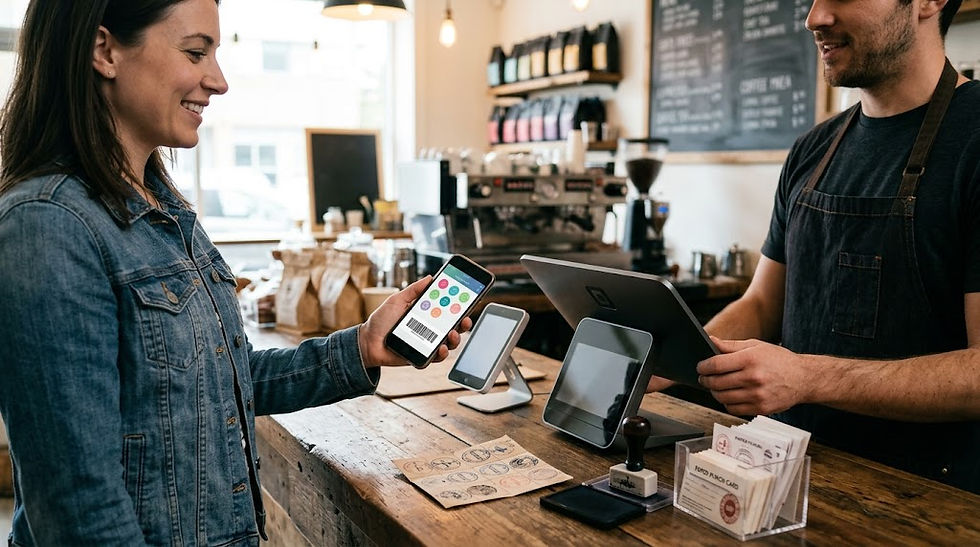
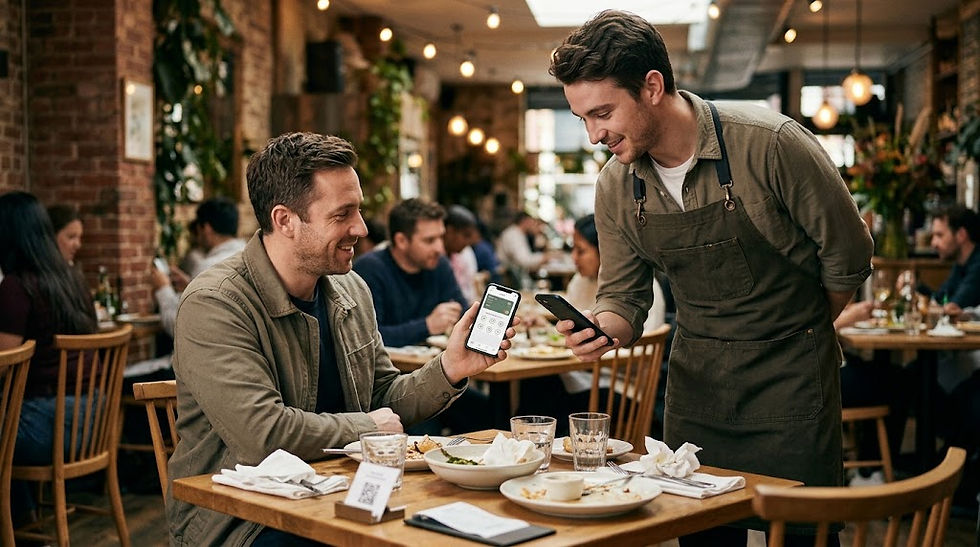
A visible QR code, a simple explanation from staff or a clear invitation at checkout can be enough to get someone started.
The customer should be able to join quickly and understand the immediate benefit without needing to download another app or complete a complicated form.
Stage two: Give customers an immediate reason to continue
A welcome reward can help create momentum, but it should not be the end of the journey.
The best welcome rewards do two things:
Give the customer a useful benefit now
Show them why they should return
For example:
A free add-on with the next purchase
Double stamps on the next visit
A complimentary upgrade
A reward that becomes available after a second visit
A small member-only benefit
The reward does not need to be expensive. It needs to feel relevant and lead naturally to the next action.
A large discount may generate sign-ups, but a smaller, well-timed benefit may do more to create repeat behaviour.
Stage three: Make the second visit obvious
The second visit is where the relationship starts to become more valuable.
Many businesses assume that customers will return because they enjoyed their first experience. Some will, but many will need a reminder or a clear reason to come back.
Make the next step obvious.
Tell customers:
What they can earn on their next visit
How soon they should return
What progress they have already made
What reward they are working towards
Whether the offer applies to a particular product, service or time
For example:
Come back this week and earn double stamps towards your next reward.
That is more useful than simply telling someone they are now a member.
Membership is passive. A next step creates action.
Stage four: Turn progress into motivation
Customers are more likely to continue when progress is visible.
A loyalty programme should answer the question:
How close am I to something worthwhile?
Digital stamp cards can make this clear by showing:
Current stamp count
The next reward
Previous rewards earned
Remaining visits or purchases
Relevant member offers
Progress should feel achievable.
If the first reward is too far away, customers may lose interest before they get there. If the first milestone is close enough to reach, it can create the momentum needed for the next one.
This does not mean every programme needs to give rewards immediately. It means the journey should be clear enough for customers to understand the value of continuing.
Stage five: Create a reason to visit regularly
A loyalty journey should fit the natural rhythm of the business.
A customer at a coffee shop may visit several times a week. A customer at a salon may return every four to eight weeks. A restaurant customer may visit once or twice a month.
The programme should reflect those patterns.
Ask:
How often do customers naturally visit?
What would make them return slightly sooner?
Which days or periods need more activity?
What reward would feel useful at that point?
How many visits are realistic before the next milestone?
A programme that expects weekly visits from salon customers will feel unrealistic. A coffee programme that takes a year to reach the first reward may feel pointless.
The journey should encourage regular behaviour without asking customers to behave unnaturally.
Use rewards to support the journey
Rewards should give customers a reason to keep going, but they should also make commercial sense.
A good reward is:
Valuable enough for the customer to care about
Affordable enough for the business to sustain
Relevant to the products or services being purchased
Easy to understand
Simple to redeem
Connected to a future visit
The reward does not always need to be free.
It could be:
A complimentary add-on
A product upgrade
Early access
A member-only experience
A small discount on a future purchase
A bonus stamp or extra progress
A product that customers would not normally try
The right reward depends on your margin, customer behaviour and business model.
Do not make every interaction a discount
Discounts can be useful, but they should not become the only reason customers return.
If customers learn that there is always a deal available, they may delay purchases until the next promotion. That can reduce margin and make the loyalty programme expensive to operate.
Use rewards to create value, not to train customers to wait.
You can offer recognition, convenience and access alongside discounts. A customer may value being the first to hear about a new product, receiving a useful upgrade or getting a reward that feels personal.
Loyalty is not only about paying less. It is about receiving a reason to choose the same business again.
Use reminders without becoming annoying
A loyalty journey needs communication, but customers do not want constant messages.
A useful reminder should be connected to something the customer has done.
For example:
They have earned a new stamp
They are close to a reward
Their welcome benefit is still available
They have not visited for a while
A relevant member offer is available
A new reward has been added
Avoid sending messages that are vague or irrelevant.
“Come back and shop with us” is easy to ignore.
“You are one visit away from your member reward” gives the customer a specific reason to act.
The more useful the message, the less frequently you need to send it.
Build for the moment after redemption
The loyalty journey should not stop when a customer claims a reward.
Redemption is a milestone, not an ending.
After a customer uses their reward, give them a reason to begin again:
Start a new stamp cycle
Introduce another reward
Offer a reason to try a different product
Invite them to a member event
Give them a new target to work towards
This is where many programmes lose momentum. The customer reaches the reward, claims it and then has no clear next step.
A strong programme makes the next journey visible before the current one ends.
Measure the journey, not just the membership list
A large number of members can look impressive, but it does not tell you whether the programme is working.
Track the movement between stages:
How many customers join?
How many make a second visit?
How many earn their first reward?
How long does it take to reach the first milestone?
How many redeem a reward?
How many continue after redemption?
Which offers lead to more repeat visits?
Which customers become regulars?
The important question is not only how many people entered the journey.
It is how many moved through it.
A smaller programme with strong repeat behaviour may be more valuable than a large programme full of inactive members.
A practical loyalty journey
A simple customer journey might look like this:
First visit
The customer discovers the business, makes a purchase and joins the programme.
Immediate benefit
They receive a useful welcome reward or a small amount of progress.
Second visit
They return because the next reward or offer gives them a clear reason to do so.
Early milestone
They earn their first reward and understand how the programme works.
Regular behaviour
They begin returning as part of their normal routine.
Continued engagement
They receive relevant rewards, useful reminders and new reasons to continue.
The exact structure will vary, but the principle is consistent. Every stage should give the customer a clear reason to take the next step.
The loyalty journey should feel natural
The best loyalty programmes do not feel like a sales funnel forced onto the customer.
They fit into the normal experience of buying from a business.
The customer visits, receives good service, makes progress and understands what they can earn next. The programme adds value without making the customer think about complicated rules every time they make a purchase.
That is the standard to aim for.
If customers need to remember too much, wait too long or complete too many steps, the journey will lose momentum.
The meed view
At meed, we think loyalty is built through a series of useful reasons to return.
The first visit creates the opportunity. The second visit creates momentum. The next few visits are where a customer starts to develop a habit.
That is why a loyalty programme should not focus only on sign-ups or the size of the first reward. It should make the customer journey clear, show progress at every stage and give people a reason to continue.
The best programmes do not simply collect members. They help businesses create regular customers.

Comments