
Digital Loyalty Cards vs Paper Punch Cards: What Actually Works for Small Businesses
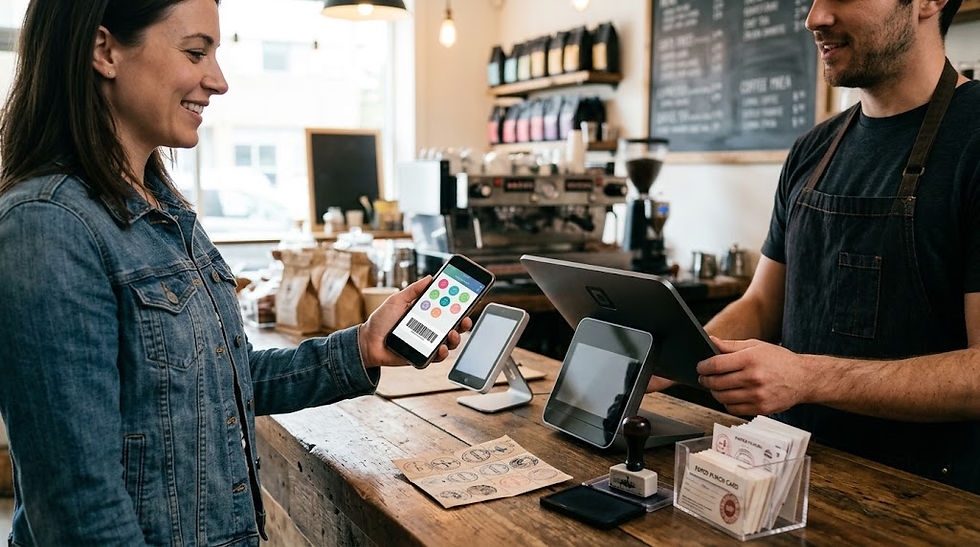
A digital punch card, also called a digital loyalty card, replaces the paper card in a customer’s wallet with one stored on their phone.
The idea behind it is not new. Customers still earn progress when they visit or buy, then receive a reward after reaching a target. The difference is how that progress is stored, how the customer accesses it and what the business can learn from the programme.
For US businesses, the familiar term is often punch card. In the UK, it is usually stamp card. Both describe the same basic loyalty mechanic.
If your business still uses paper, switching does not have to mean changing everything at once. The practical question is whether digital solves enough of paper’s limitations to make the move worthwhile.
What Paper Punch Cards Get Right
Paper punch cards have lasted because they are easy to understand.
A customer receives a card. A member of staff punches or stamps it after an eligible purchase. When the card is full, the customer receives a reward.
There is very little explanation required. Staff already know how to use them, customers recognise the format and a business can order a batch without changing its existing systems.
Paper cards can work particularly well when:
The reward is simple
Customers visit frequently
Staff already handle every transaction
The business does not need customer information
The programme is small enough to manage informally
They also feel tangible. A customer can see each punch or stamp being added and watch the remaining empty spaces disappear.
For a small business testing loyalty for the first time, that familiarity has value. The problem is not that paper punch cards never work. It is that they stop working whenever the card is lost, forgotten or disconnected from the customer’s normal routine.
Where Paper Punch Cards Fail
The biggest weakness of a paper card is that the programme depends on the customer keeping one small piece of card.
Cards get left at home, damaged in bags, washed in pockets or thrown away with receipts. A customer may have two partly completed cards and no simple way to combine them.
When a card disappears, the business usually cannot verify the customer’s previous progress. Staff must decide whether to replace the stamps, restart the card or make an exception.
Paper also gives the business almost no useful customer data.
You may know how many cards you printed, but not:
How many are still being used
How many customers are close to a reward
How often members return
Which rewards are redeemed
Who has stopped visiting
Whether the programme is changing customer behaviour
That makes it difficult to improve the offer.
A paper punch card cannot remind a customer that they are one visit away from a reward. It cannot help identify regulars who have gone quiet. It cannot show
whether customers lose interest after the third stamp or complete the card quickly.
The business is running a loyalty programme, but it cannot see much of the loyalty happening inside it.
What a Digital Punch Card Does Differently
A digital loyalty card keeps the familiar progress-and-reward structure but stores it on the customer’s phone.
With meed, customers can keep their card in Apple Wallet or Google Wallet. They do not need to carry a paper card or download a separate customer app.
The card can show:
Current punch or stamp progress
The next available reward
Rewards already earned
The business’s name and branding
Relevant programme information
When a customer earns another stamp, the existing card updates. When they reach a reward, that reward appears within the same loyalty experience.
The business also gains visibility through its portal. Instead of only knowing how many cards were printed, it can review membership activity, rewards earned, redemptions and engagement.
Digital does not automatically make a loyalty programme effective. The reward still needs to be relevant, achievable and financially sensible. What digital changes is the business’s ability to track what is happening and adjust the programme based on actual activity.
What Switching from Paper to Digital Looks Like
Switching does not require new hardware.
A business can create its digital card, choose the number of stamps and define the reward using devices it already has. Staff can handle stamps and redemptions through the meed for Business app on a compatible phone or tablet.
Customers can enrol in three ways:
Scan a QR code
Tap an NFC point
Open a link shared by the business
A QR code might sit at the counter, on a table or on a receipt holder. An NFC point might be placed near the till. A joining link can be added to Instagram, an advertisement, a website or a Google listing.
Customers register with their name and phone number, then confirm the number using a one-time password. The web app asks whether they would like to add the card to Apple Wallet or Google Wallet.
Receipt scanning may be used to earn stamps after joining, depending on the programme. It is not an enrolment method.
The business does not have to withdraw every paper punch card immediately. A cautious transition can look like this:
Launch the digital loyalty card.
Offer digital enrolment to new customers.
Continue honouring existing paper cards.
Explain the digital option to returning cardholders.
Phase out paper as existing cards are completed.
This avoids forcing customers to abandon progress they have already earned.
If the business decides to transfer existing progress, staff can verify the paper card and manually add equivalent stamps to the new digital card. That requires a clear internal policy so every customer is treated consistently.
What Changes for Staff and Customers
For staff, the main change is the stamping action.
Instead of punching a physical card, staff can apply a stamp using the meed for Business app. Businesses can also use other earning methods, such as customer check-ins or eligible receipt scanning, depending on how the programme is configured.
The reward itself does not need to change. A coffee shop can still offer a free drink after nine purchases. A salon can still give a discount after five visits. A restaurant can still reward a returning diner after a chosen number of meals.
For customers, the main change is where the card lives. They open Apple Wallet or Google Wallet instead of searching a pocket or bag.
There may be a short adjustment period for customers who prefer paper. Running both formats during the transition gives those customers time to finish their cards while new members start digitally.
Paper Punch Card Costs vs Free Digital Loyalty
Paper cards appear inexpensive because the immediate cost is easy to see. You pay for design and printing, then reorder when stock runs low.
The complete cost may also include:
Reprinting when details or branding change
Custom punches or stamps
Staff time handling lost cards
Replacement cards
Unused cards that are never completed
Discounts or rewards issued without reliable records
These costs vary by business, printing volume and card quality. Paper may still be inexpensive for a very small programme, but it remains a recurring cost with limited visibility.
A digital programme can be tested without a printing order. meed is free for the first 50 customer members, plus one additional slot that lets the business owner test the complete experience.
That does not mean digital has no operational cost. Staff still need to understand how stamps and rewards work, and the business still needs to choose a reward it can afford.
The difference is that the initial platform cost can be zero, while the business gains a clearer record of membership and programme activity.
Is a Digital Loyalty Card Worth the Switch?
Paper punch cards are familiar and easy to start. For some businesses, that may be enough.
A digital loyalty card becomes more useful when the business wants to know who its regulars are, protect customers’ progress, understand redemptions and build a loyalty programme it can improve over time.
The lowest-risk approach is not an overnight replacement. It is a gradual transition that honours existing paper stamp cards while moving new members to digital.
You can use Express Launch to create and test a digital loyalty card in minutes, without purchasing new hardware or committing to a paid plan before your first 50 members.



Comments